

Loose skin after Ozempic, Wegovy or Mounjaro is not just extra skin left behind. Rapid, major weight loss also changes the quality of the skin itself: it thins, loses elasticity and loses much of its ability to retract. That is why skin-tightening devices alone often disappoint, and why the right plan starts with an honest assessment of the skin, not with a machine.
In this guide I explain what happens to the skin, what exercise and devices can realistically do, and how I plan surgery when skin needs to be removed.
Why the skin doesn’t bounce back
Skin owes its firmness to collagen, and its ability to spring back to elastic fibres. Studies of skin removed during body-contouring surgery after massive weight loss show both are affected:
- A 2024 study in Obesity Surgery examined 80 skin samples from abdominoplasty and breast reduction patients after massive weight loss. Collagen was reduced both in patients who lost weight after bariatric surgery and in those who lost it without surgery. The authors note these changes weaken the skin’s ability to retract and conform to the new body shape.
- An earlier study in Eplasty (2015) describes skin laxity after rapid weight loss as resulting from damage to collagen and elastin, which allows little skin retraction afterwards.
GLP-1 medicines such as semaglutide (Ozempic, Wegovy) and tirzepatide (Mounjaro) now produce weight loss on a scale that used to follow bariatric surgery. ISAPS guidance from 2025 lists skin laxity as one of the main new challenges these medicines create for plastic surgeons.
In practice, this means two patients who lost the same weight can need very different treatment. The deciding factor is the quality of the skin that is left.
Loose skin has more than one direction
Skin excess is multidimensional. It hangs downwards (vertical excess) and it is also too wide around the body or limb (horizontal excess). Most areas have both, in different proportions, and the treatment has to match.
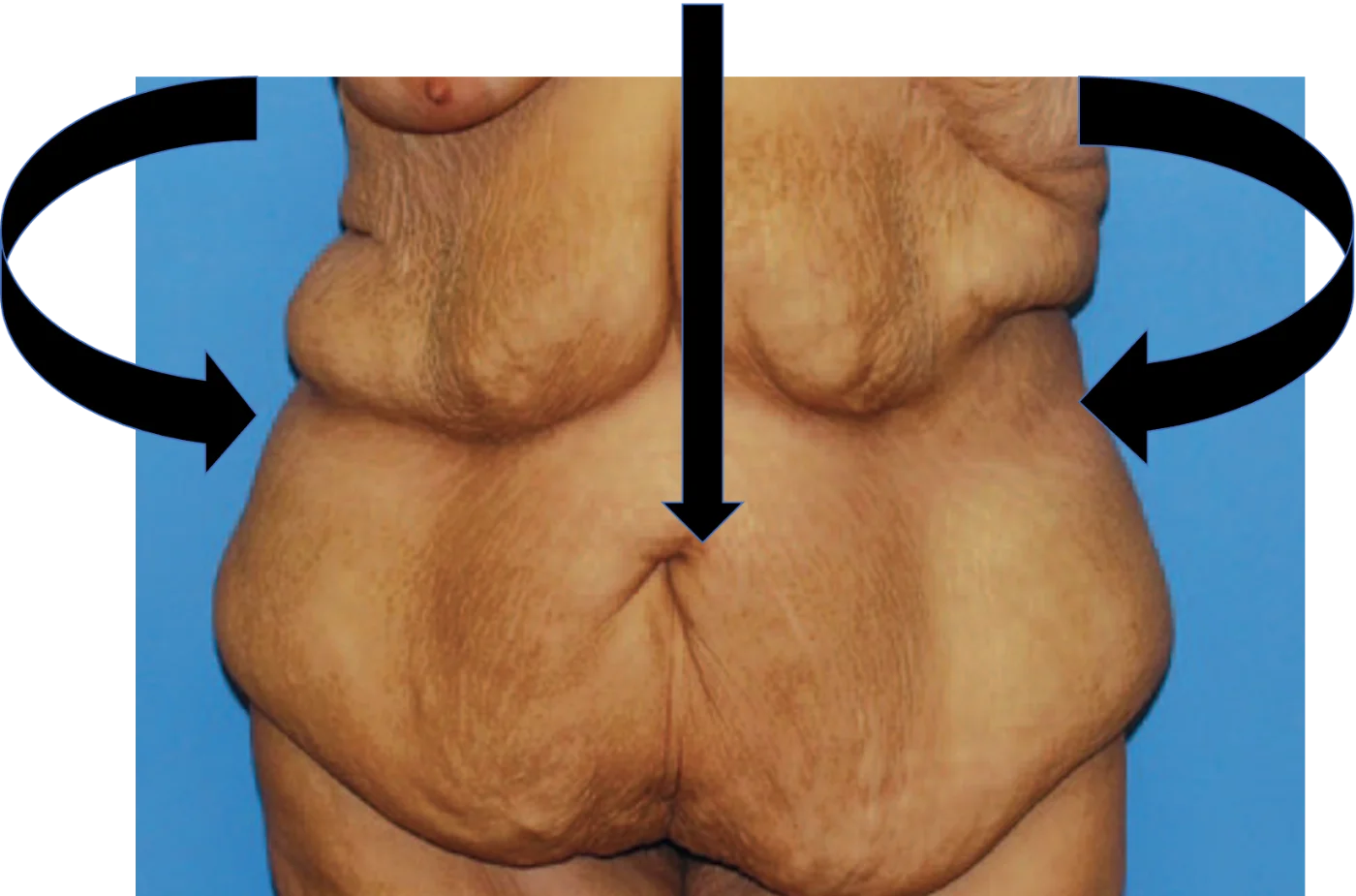
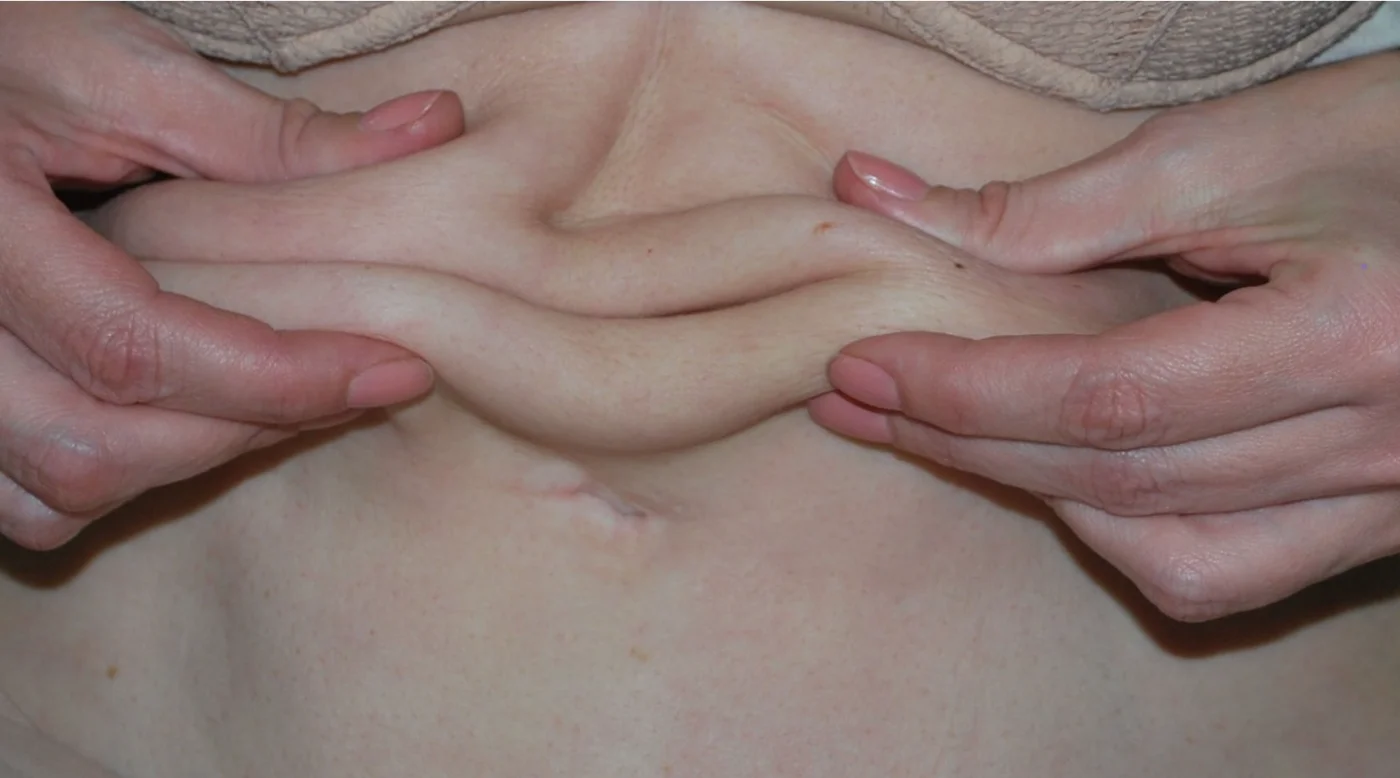
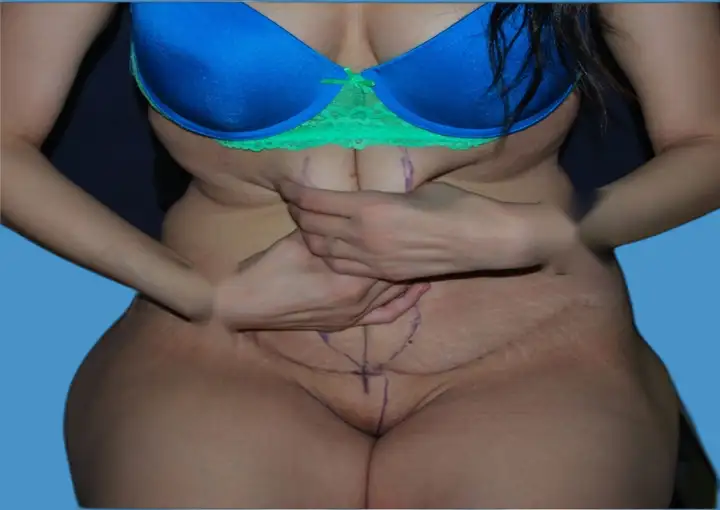
| Area | Typical excess | What it means for treatment |
|---|---|---|
| Face and neck | Vertical and horizontal | Lifting must reposition as well as remove |
| Arms | Mostly horizontal (the hanging “bat wing”) | Often needs skin removed along the arm |
| Thighs | Vertical at the groin, horizontal along the inner thigh | A groin lift alone may not be enough |
| Trunk: abdomen, back, flanks | Vertical and circumferential | Tummy tuck or a lift around the body |
| Breasts | Mostly vertical (descent) | Breast lift, sometimes with volume |
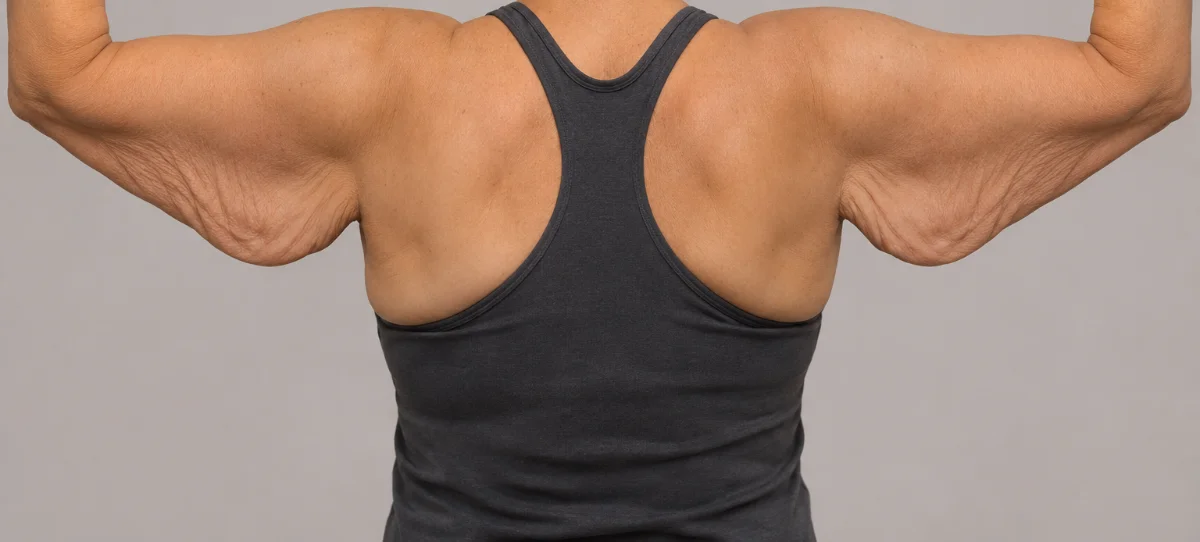
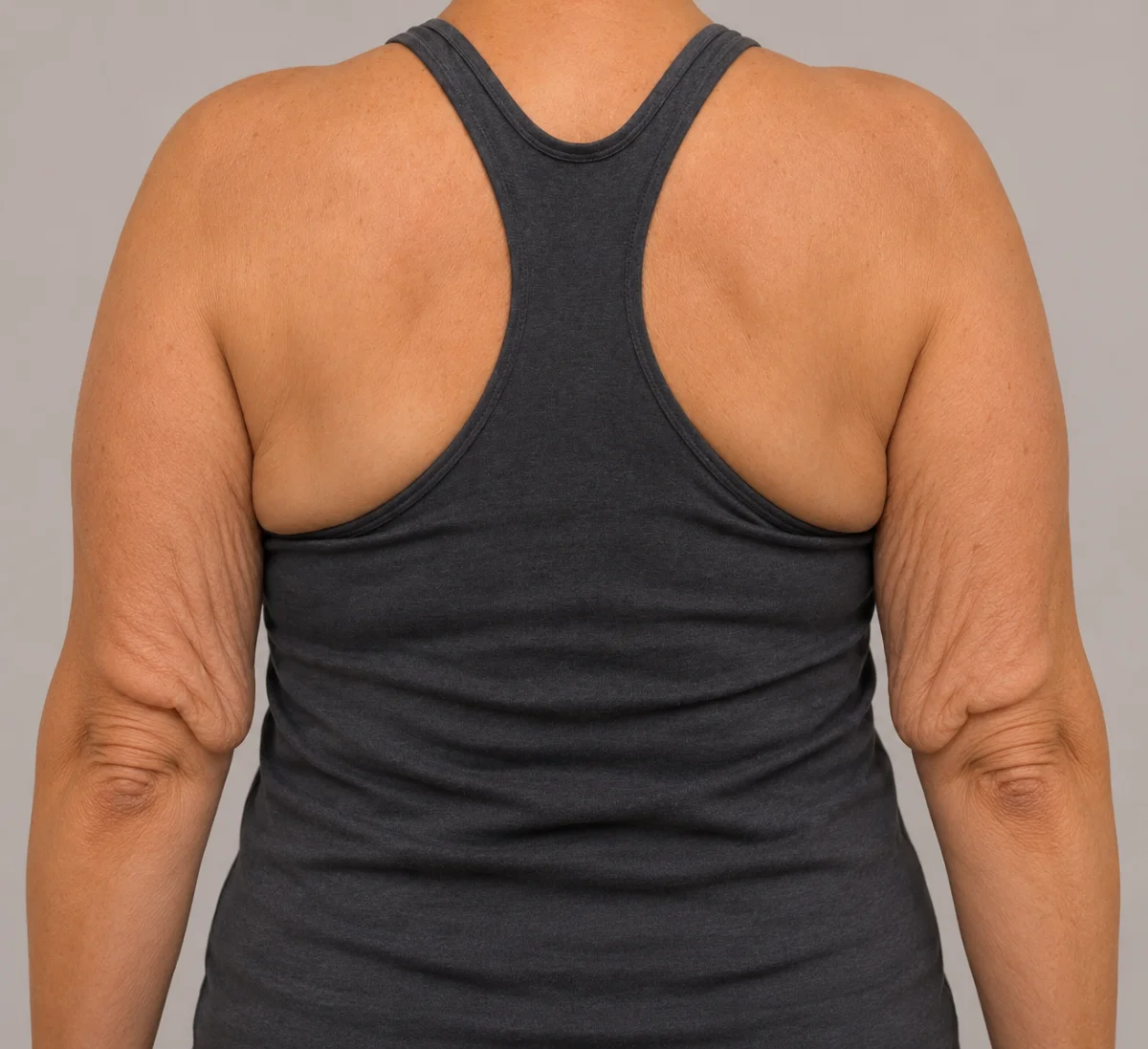
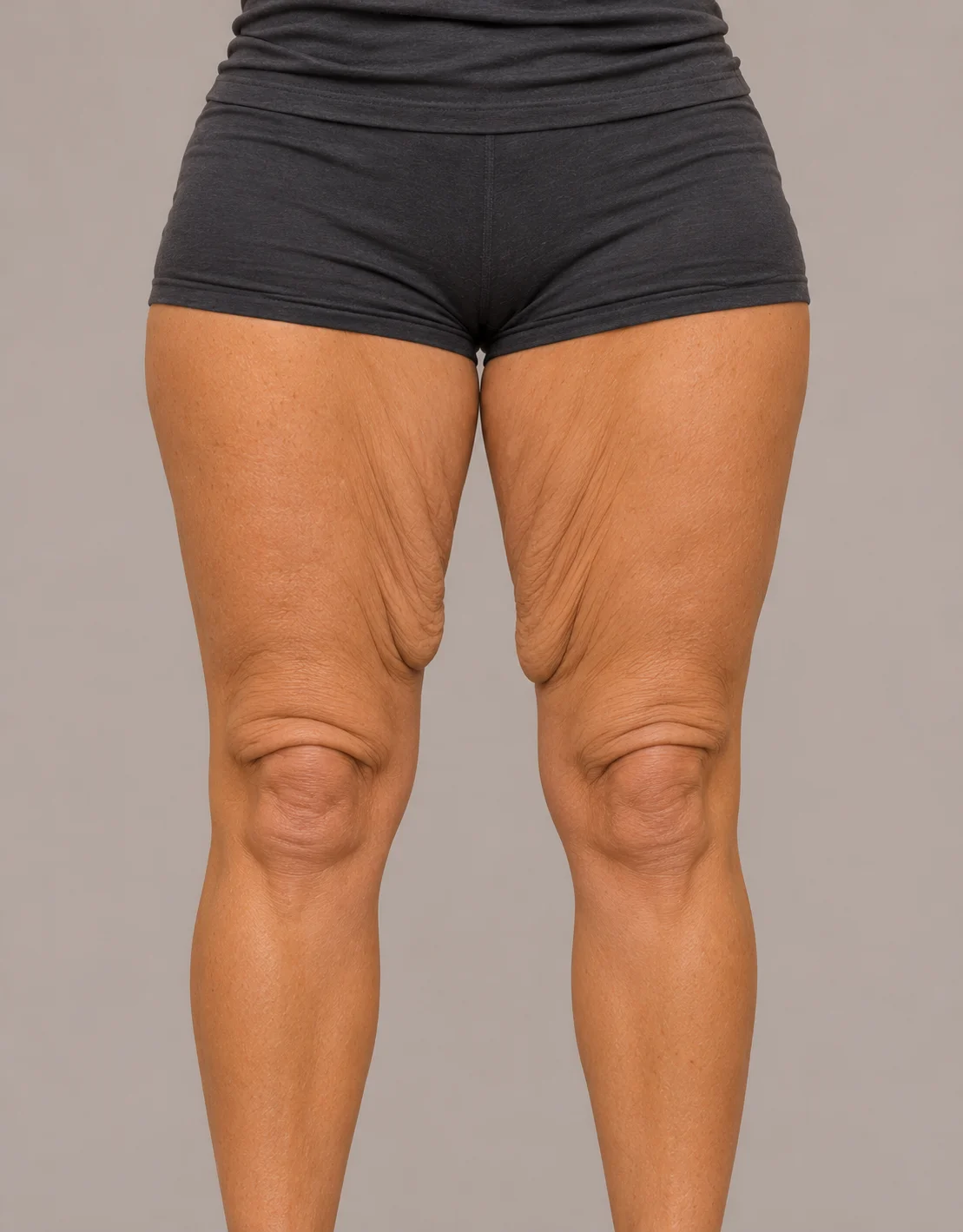
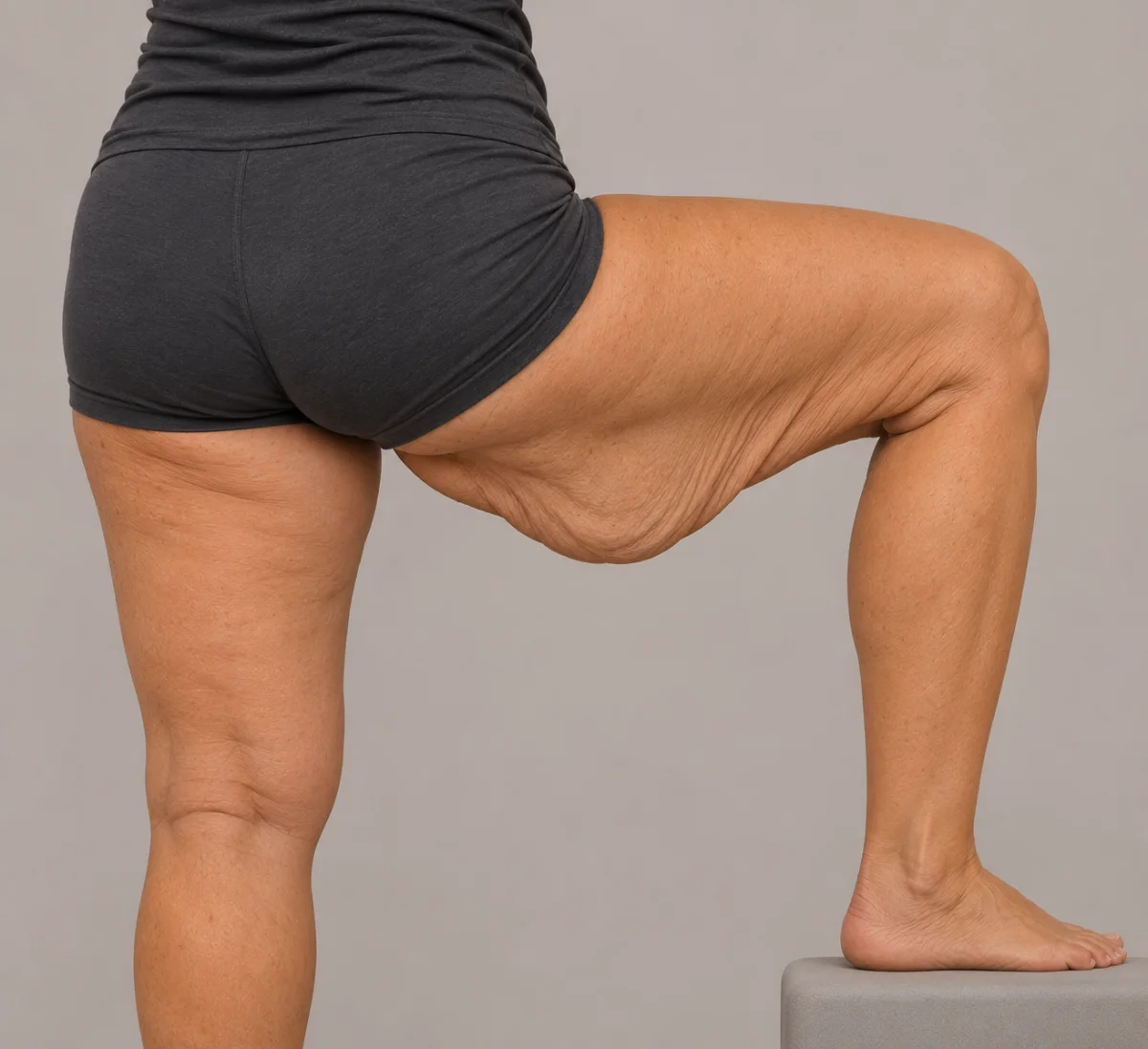
On the arms and thighs, the direction of the excess decides whether a hidden scar is enough or a longer scar along the limb is needed.
My classification: primary or secondary sagging
Before recommending anything, I examine the skin and the tissue under it, and place the sagging in one of two groups.
- Primary skin sagging. The skin itself is thinned out, often with stretch marks, and has lost its retractile quality. No technology will tighten this skin meaningfully. If it bothers the patient, the answer is removing it surgically.
- Secondary skin sagging. The skin is of reasonable quality but is being pulled down by the weight of the fat beneath it. Here, reducing that fat with my stratified infiltration technique (SIT) and laminated (layer-by-layer) liposuction lets the skin contract and re-drape, often without a skin-removal operation.
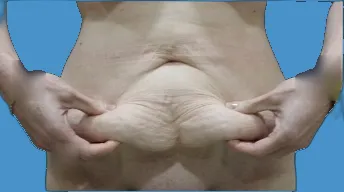
Many patients have a mix: primary sagging in one area, secondary in another. The plan follows the area, not the label.
What diet, exercise and muscle can do
My first advice to anyone losing weight is a healthy, nutritious diet and regular exercise throughout. If you have already lost the weight, add both to your routine now.
Building muscle fills out loose skin from underneath and can improve some sagging. This works best in men, and to some extent in women:
- Arms: triceps and biceps work fills the upper arm.
- Thighs: quadriceps and inner-thigh muscles.
- Back: a stronger back reduces the look of back rolls.
- Chest: pectoral muscles support the skin over the chest.
Muscle will not remove skin that is truly in excess, but it improves the base that any later treatment works on.
What skin-tightening devices can and cannot do
External devices such as radiofrequency treatments work best on the face, to a lesser extent on the neck, and sometimes on small localised areas such as the skin above the belly button or the inner arms.
Internal devices placed under the skin, such as Endolift laser, VASER, Renuvion and Quantum RF, have limited ability to contract skin. They help most when the skin is still of good quality and the sagging is secondary.
For primary sagging, with thin, stretch-marked skin, no device can replace removing the excess. Spending on repeated tightening sessions in that situation usually delays the right treatment. (See Best Liposuction Technologies in 2027.)
How I plan skin removal and body lifts
Not all excess skin can or should be removed. My plan follows three principles.
- Hidden scars first. I prioritise areas where the scar can be hidden: tummy tuck, inner thigh lift at the groin, back lift along the bra or belt line, the underarm, and behind the ears for the face and neck.
- Visible scars only when the deformity justifies them. A vertical arm lift (brachioplasty), vertical thigh lift, breast lift, or bra-roll and mid-back lift leave more visible scars. I advise these only when the skin is so excessive that it deforms the area, and when the patient’s scar quality is good.
- Staged surgery. I often start with a tummy tuck or a lower back lift. How the patient heals and scars there tells me how to plan the other areas, and only then do I proceed.
When to have surgery after GLP-1 weight loss
Wait until your weight has been stable for some months. A 2025 systematic review in Aesthetic Plastic Surgery found weight tends to stabilise after 8 to 12 months of semaglutide use. It also found many people regain much of the weight after stopping the medicine, so a stable plan for weight maintenance matters before any skin is removed.
Tell your surgeon you are taking a GLP-1 medicine. It affects anaesthesia planning, so your surgical team will advise when to pause it before surgery.
Frequently asked questions
Will my skin tighten on its own after Ozempic or Mounjaro?
Some tightening happens over months, especially in younger skin of good quality. Thin, stretch-marked skin that has lost its elasticity rarely tightens enough on its own.
Can Renuvion or radiofrequency replace a tummy tuck?
Only for mild, secondary sagging on good-quality skin. Hanging skin with stretch marks needs to be removed.
Does building muscle help loose skin?
Yes, to a degree. Stronger arm, thigh, back and chest muscles fill out the skin and improve mild sagging, more so in men.
Can all loose skin be removed in one operation?
Not always, and not always wisely. I usually stage surgery, starting with areas where the scar hides well.
How do I know which treatment I need?
It depends on your skin quality, the direction of the excess and where the scars would sit. Book a consultation with Dr Sanjay Parashar in Dubai for an assessment.
References
- Hany M, Zidan A, Ghozlan NA, et al. <a href=”https://doi.org/10.1007/s11695-024-07066-y” target=”_blank” rel=”noopener”>Comparison of histological skin changes after massive weight loss in post-bariatric and non-bariatric patients</a>. <em>Obesity Surgery</em>. 2024;34:855–865.
- Sami K, et al. <a href=”https://pmc.ncbi.nlm.nih.gov/articles/PMC4311578/” target=”_blank” rel=”noopener”>Image analyzer study of the skin in patients with morbid obesity and massive weight loss</a>. <em>Eplasty</em>. 2015;15:e4.
- Garbaccio NC, et al. <a href=”https://pubmed.ncbi.nlm.nih.gov/40835770/” target=”_blank” rel=”noopener”>Plastic surgery in the Ozempidemic: considerations for the timing of body contouring surgery in patients with semaglutide-associated weight loss</a>. <em>Aesthetic Plastic Surgery</em>. 2025;49:6078–6088.
- ISAPS. <a href=”https://www.isaps.org/media/tw1j4oko/260522_isaps-ps-emerging-guidance_rise-of-glp-1-ra-drugs_final.pdf” target=”_blank” rel=”noopener”>The rise of GLP-1 receptor agonist drugs and plastic surgery</a>. Emerging guidance, June 2025.